


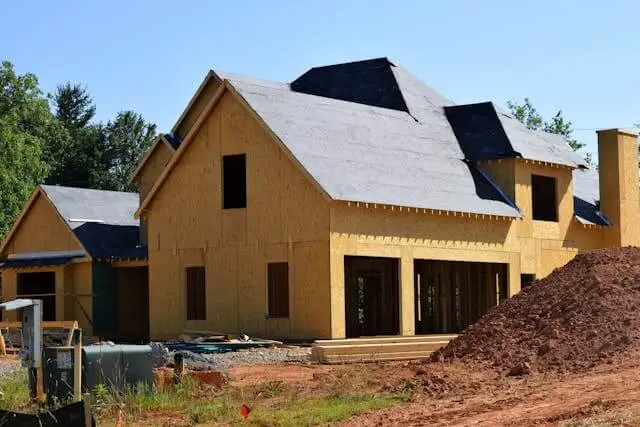
In accordance with the provisions of Article 30(2) of the GENERAL PLANNING REGULATIONS of 27 June 1996, republished – Authorization to execute the execution of subdivisions, on the basis of these Regulations, is permitted only if the following conditions are cumulatively met for each individual lot:
(a) street frontage of at least 8 m for buildings strung together and at least 12 m for detached or coupled buildings;
(b) minimum plot area of 150 square meters for row-built buildings and at least 200 square meters for detached or coupled buildings, respectively;
(c) depth greater than or at least equal to the width of the plot.
According to paragraph (3), only lots which comply with the provisions of paragraph (2) shall be considered as building plots.
On the basis of this general provision, it would follow that it is possible to build a building on a plot of land with a 10 meter opening, but it should be noted that the construction of the building depends on several specific factors, including local planning regulations, the use of the land and the building standards in force in the area.
In Romania, each local authority has a General Urban Development Plan (PUG) which sets out specific rules for building in different areas of the city or municipality. Below are some general points to consider.
The General Urban Plan (PUG) is the document that defines the urban planning rules for a particular administrative unit, including what type of buildings can be built, how tall they can be and what setbacks are required from the property boundary. Checking the PUG for the area in which the land is located is the first step in determining whether building is possible.
Local planning regulations. In addition to the PUG, each locality may have a specific urban planning bylaw that may impose additional restrictions, such as the percentage of land occupation (POT), land use coefficient (CUT) and maximum permitted building height. These details directly influence what and how much can be built on a plot of land.
The 10-meter lot opening can influence the type of building allowed. For example, some local bylaws may require a minimum opening for certain types of construction or limit the number of floors allowed on land with restricted openings.
To better understand what type of building is possible on a 10-meter lot, it is advisable to consult an architect or urban planner. These professionals can provide specific advice based on local regulations and the characteristics of the land.
The urban planning certificate is an essential document in the planning of any real estate project, providing detailed information about the urban, legal, technical and economic regulations applicable to a plot of land. This document is issued on request by local authorities and serves several purposes, mainly providing a basis of information for drawing up building plans and obtaining the necessary permits.
When someone intends to start a construction, consolidation, restoration, extension, extension, alteration or even demolition project, the urban planning certificate is required to clarify the urban planning conditions that must be respected. This document indicates aspects such as setbacks from the property boundaries, the maximum permitted height of the building, or the occupancy coefficient of the land. Although it does not confer the right to build, it is a necessary preliminary step before applying for planning permission.
The planning certificate is also useful in real estate transactions and is often requested by buyers to check whether it is possible to build on the land to be purchased or what the legal conditions are for building. It may also be necessary for the settlement of certain notarial procedures (such as the division of land into several lots or the creation of an easement).
The process of obtaining the certificate involves submitting an application to the local town hall. After assessing the application, the local authority issues the certificate, which specifies the applicable conditions and restrictions, within a time limit that may vary depending on the complexity of the application.
Referral to local authorities. Before starting any construction project, it is necessary to obtain all necessary approvals and authorizations from the local authorities. This includes submitting construction plans and waiting for their approval.
Therefore, while the 10-meter opening does not preclude the possibility of building, the type and size of construction allowed will depend significantly on the rules and regulations applicable in the area. It is therefore important to carry out a thorough analysis of the regulations and consult with professionals.


