


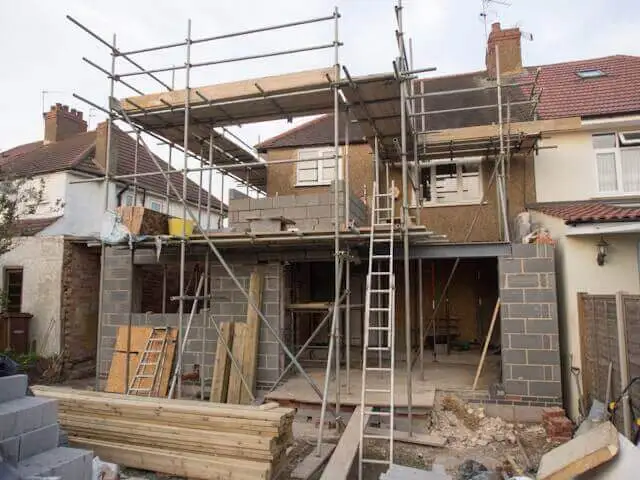
The construction of new buildings, whether residential, commercial or other, requires compliance with strict regulations designed to ensure balanced and sustainable urban development.
In Romania, the legal status of land is clearly demarcated between intravilan and extravilan, each category having specific rules regarding the possibility to build. Building on land in Romania is regulated by multiple pieces of legislation, including Law 50/1991 on the authorization to execute construction works and Law 18/1991 on the land fund. These laws lay down the conditions under which building can take place both within and outside the built-up area.
The intravilan of a locality is the territory intended for construction and other urban activities, established by the General Urban Plan (PUG). According to Article 91 of Law No 18/1991 on Land Fund “the location of new constructions of any kind shall be within the intravilan of the administrative-territorial units”. The intravilan includes all land of any kind, with or without buildings, organized and delimited as independent bodies, planted, permanently under water, in the agricultural circuit or having another destination.
The extension of the intravilan into extravilan can only be realized on the basis of zoning urban plans (PUZ), which are subsequently integrated into the PUG of the locality. This extension must be well founded and legally approved, thus ensuring planned and controlled urban development.
Extravilan is the territory between the intravilan limit and the administrative-territorial limit of a basic unit (municipality, city, commune). According to Article 92 of Law no. 18/1991, “it is forbidden to erect buildings of any kind on agricultural land outside the built-up area, on land developed for land improvement works, as well as on land planted with vineyards and orchards, national parks, reserves, monuments, archaeological and historical sites”. These regulations are designed to protect farmland and other lands of national interest.
CONDITIONS FOR BUILDING ON URBAN LAND IN ROMANIA
Building in the built-up area is allowed, but must comply with certain legal conditions. The first step in starting a construction project is to obtain a planning certificate. This document sets out the legal, economic and technical status of the land and confirms whether it can be built on.
Once the planning certificate has been obtained, a building permit can be applied for. The planning certificate also specifies the conditions and restrictions that must be complied with in order to obtain planning permission. Once the planning certificate has been obtained, the building permit can be applied for.
According to the legislation in force, construction means those structures that can only be built on the basis of and in compliance with the building permit. The local authorities assess the documentation submitted and check that the project complies with the planning and building regulations. If all the conditions are met, the local authority issues the building permit, which allows work to start on the site.
For agricultural land within the built-up area, building authorization is also granted in accordance with Article 4 of the General Urban Planning Regulation, which stipulates that “authorization to build on agricultural land within the built-up area is permitted for all types of construction and development specific to the locality, subject to the conditions imposed by law and by this Regulation.” At the same time, agricultural land in the intravilan shall be taken out of the agricultural circuit, temporarily or permanently, by means of a building permit.
IS IT POSSIBLE TO BUILD ON EXTRAVILAN LAND? – CONDITIONS FOR BUILDING IN EXTRAVILAN IN ROMANIA
Building on extravilan land is more restrictive and is strictly regulated by law. As mentioned above, in accordance with art. 92, para. (1) of Law 18/1991, “it is forbidden to erect buildings of any kind on agricultural land outside the built-up area, on land developed for land improvement works, as well as on land planted with vineyards and orchards, national parks, reserves, monuments, archaeological and historical sites”.
There are, however, certain exceptions to this rule set out in para. (2) of the same Article. These exceptions allow building on class III, IV and V agricultural land of arable, pasture, vineyards and orchards, as well as on land developed for land improvement works, located in the extravilan. The constructions allowed under these conditions include public and private projects that may generate polluting effects on the environment, activities that cannot be located in the urban area, such as quarries, quarries, quarries, borrow pits, landfills, mountain refuges, and emergency shelters.
Also permitted are buildings used for animal protection, agricultural and/or related services, such as mineral or natural fertilizer stores, composting buildings, feed silos, sheds, sheds, silos for the storage and preservation of seeds for consumption, including their related administrative premises, platforms and storage premises for primary agricultural products, livestock housing and livestock farms/zootechnical farms, greenhouses, solariums, seedbeds, mushroom farms, specific objectives for the production of electricity from renewable energy sources exclusively for the purpose of providing energy for the holding’s own consumption, located on farms, premises for processing/processing/marketing plant and livestock products, and buildings for agri-tourism use for projects financed by European funds.
To summarize, building in the built-up and non-built-up areas is regulated by specific laws that clearly set out the necessary conditions and procedures. In the built-up area, construction is easier to carry out, but requires a town planning certificate and building authorization, while respecting urban plans and local regulations. Building outside built-up areas is much more restricted, being allowed only in special cases laid down by law, to protect agricultural land and other areas of national interest.


